
Why we chose these plants
Often we have edible flowers in our gardens, but don’t think of them as usable. Many herbs, vegetables and ornamental flowers have petals which can be plucked and parleyed into pretty palatable dishes. Sometimes edible flowers are mild tasting and and sometimes they surprise us with flavor as bold as the herb itself. This discovery is whimsical and is one reason edible flowers are just plain fun.
Edible flowers are flights of fancy that can be added as garnish to salads, butters, vinegars, sugars and savory meat dishes. Some can be candied, some can be dried or frozen, but most are best fresh. Usually, it is better to use the individual petals when incorporating them into food. The base of the petal or the calyx can be bitter or off tasting.
For decorating, whole flowers and even clusters of flowers may be used.
As with all plants we eat, be sure you know the flower is edible and has not been sprayed with toxic pesticides or herbicides or fertilized with chemical fertilizers. Never use flowers from the florist. Wash flowers gently before using and lay on a towel to dry or blot carefully.
Chomley Farran Dianthus
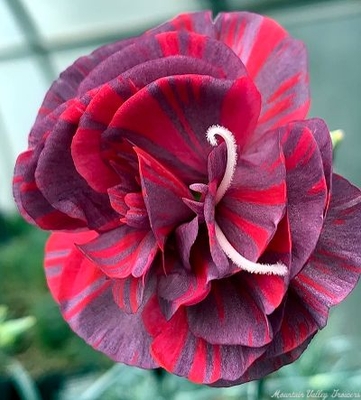
If you are going to garnish a plate, or candy a flower it might as well be the most outrageously gorgeous flower you can find. Chomley Farran is a lanky member of the carnation family with bicolor, pink and purple, flowers. This makes a lovely hanging basket plant. If grown in the ground, the flowers need to be lifted up by a support ring, similar to a peony.
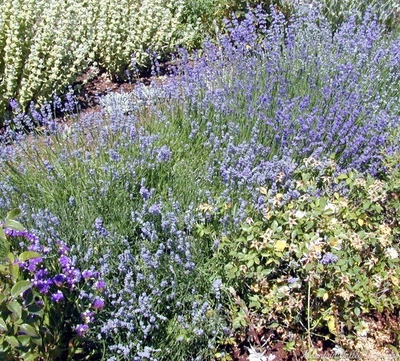
Munstead English Lavender
Munstead Lavender flowers are full of rich sweet flavor and are especially nice when used with sweets. Add a tablespoon of finely chopped lavender flowers to any sugar or butter cookie recipe or add two tablespoons to any pound cake or white cake. This makes an elegant addition to tea time. They are also good for butters and cream cheese recipes. Use about 7 Tablespoons of chopped flower petals to one-half pound softened butter. As with all the flowers, pick when just opened and not when starting to turn brown. Waiting even a day or two to pick, can affect the flavor. It is best to eat only the flower petals. Do this by pulling the flowers away from the little brown or green cap that holds them. Lavender flowers can be fresh-frozen or dried.
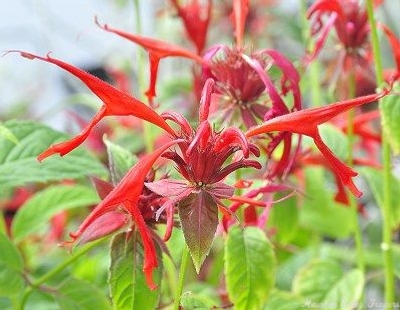
Lavender Bee Balm or Red Jacob Kline Bee Balm
While we only include one of these Bee Balms (depending on what is in stock), both have spicy flowers that are large and colorful. Often called Bergamot because of its citrusy flavor similar to the Bergamot Orange Tree, a tablespoon of Bee Balm flowers makes a great addition to the oil when frying white fish or scallops. Their strong flavor also goes well with meat and pork dishes. Whole flowers make attractive floaters in punch bowls of Sangria. Whole flowers also make good plate rings; surround the outside of your entrée platter with Bee Balm flowers to create a more visually appealing dish. Bee Balm flowers can be fresh frozen and will keep for two months or more. Dried flowers, and leaves, can be added to black tea to mimic an Early Gray tea. Bee Balm flowers can be steeped in the milk that is used to make ice cream. Warm the milk and then strain the flowers out before making the ice cream. The flowers can be added to light cake batters and add a bit of color and nutty flavor. Be sure to chop the fresh flowers coarsely before adding to batter. Add at the end of mixing.
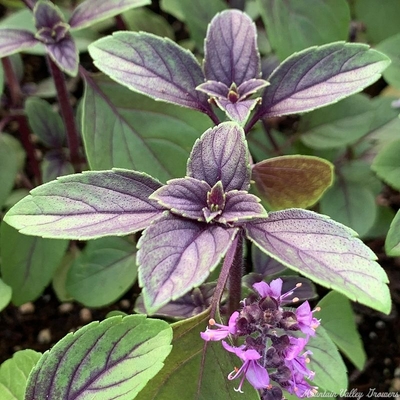
African Blue Basil
All basils have tasty flowers, but this basil’s flowers are a rich pink instead of the usual dingy white found on most basils. African Blue Basil is sterile and never makes a seed, but it keeps trying. This results in long flower stems up to 18 inches that just keep blooming. Individual edible flowers can be plucked from the stem for eating or preserving or whole stem segments can be used for making vinegars or as a dramatic garnish. Add African Blue Basil flowers to sour cream for baked potatoes, top your favorite pasta dish with them or float them in ice cube trays and add to ginger ale, champagne or white wine spritzers. Because Basil flowers are quite strong they make good vinegars. Use a light rice wine vinegar or white wine vinegar and let the pink flowers tint the vinegar. Chive flowers and Oregano flowers are also able to stand up to vinegar. Leaves and flowers can be pureed with olive oil and frozen for winter use. Use about 3 cups leaves to 1/3 cup olive oil and store flat in small resealable bags.
Attar of Rose Geranium
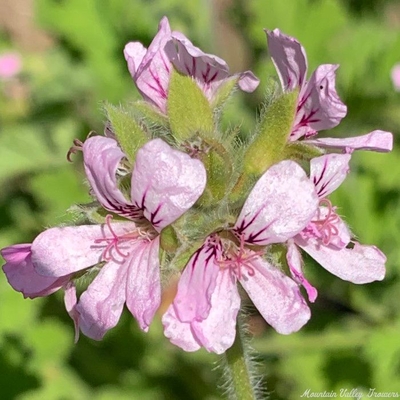
Attar is a general term that applies to perfume from flowers. Normally it is used in connection with rose petals and rose distillation. However, because it takes 150 pounds of roses to make 1 ounce of essential oil, the Pelargonium, Attar of Rose, is often pressed into service. Little pink flowers cover the plant in late summer and are great candidates for candying. The flowers make attractive confetti when used in sorbets and jellies. Traditionally, scented geraniums are added to apple jelly. To actually flavor the jelly with Attar of Rose scented geranium, you will need to use the leaves during the boiling of the jelly. For 4 pounds of apples, insert about 14 whole leaves of the geranium in a cheesecloth pouch and remove when jelly is ready to set. Add about 2 Tablespoons of chopped flower petals for appearance right before pouring the finished jelly into jars. Make sure to use only the flower petals and not the bracts that hold the flowers. Attar of Rose Geranium flowers are a perfect candidate for candying.
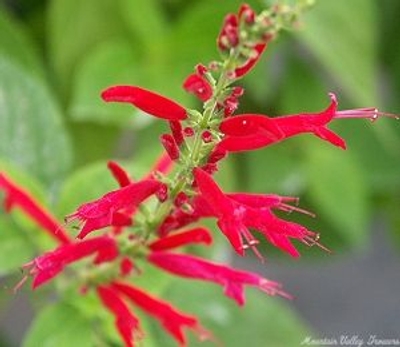
Pineapple Sage
The long red tubes of Pineapple Sage are the saving grace for this plant. Even though this plant is extremely fragrant, it has little if any value for cooking. The flowers are reminiscent of Honeysuckle and make a colorful addition to salads, fruit cocktails or any garnish. Their vibrant red color compliments many dishes. They are particularly attractive with yellow or green bell pepper. They can be sugared and used to garnish cakes or cookie platters.
Additional plants to consider
The plants listed here make excellent additions to this collection. Click through to read more about them or add them to your order.